
By Noor Chadha and Lacy Davisson Doyle
Here is a preview of the outstanding exhibitions on view in New York City this fall:
Upper East Side Gallery Highlights
Miquel Barceló
Acquavella Galleries, 18 E. 79th Street, New York
October 9 – November 22, 2013
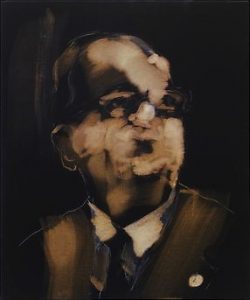

The artist’s first solo exhibition in the United States in nearly a decade features two distinct series: white textural paintings, and dark portraits painted with bleach, chalk, and charcoal.
Barceló’s work is reflective of a lifetime of extensive travels in Europe and West Africa. The first group – a series of twenty-two white, tactile paintings – references the coastal terrain of Barceló’s native Majorca. Nature is a recurring subject in the artist’s work, and he describes the new paintings as “seascapes that correspond to my previous series of white desert landscapes.”
Barceló uses bleach, chalk, and charcoal on canvases of dark linen, cotton and velvet in a second series of paintings depicting distorted portraits of the artist’s family and friends.
David Salle: Ghost Paintings
Skarstedt Gallery, 20 East 79th Street, New York
November 8 – December 21 2013

This exhibition features 14 works made in 1992, but never exhibited before this year. Curated by Arts Club of Chicago Director Janine Mileaf, the exhibition travels from that venue, where it was seen in summer 2013. The Ghost Paintings are made from large photographic images printed on three contiguous linen panels. The subject of the photography is a woman creating improvised movements under a large piece of fabric. The three horizontal panels are then painted over with fields of intense color. The series represents the canvas surface of painting at three levels: as a photographic subject (the fabric in the dancer’s hands), as a readymade ground (the linen imprinted with photographic emulsion), and as a traditional surface for the application of paint.
Matisse Prints: 1906 – 1950
Pace Master Prints, 32 E. 57th Street, 3rd Floor, New York
October 17 – November 16, 2013
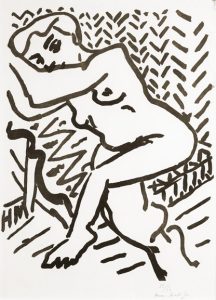
In virtually every print medium, Henri Matisse (1869 – 1954) reveals his innate sense of the aesthetic possibilities of printmaking. Often following arduous sessions of easel painting, printmaking gave the artist a refreshing opportunity to reexamine the elements of composition and line. The exhibition will feature thirty important woodcuts, etchings, lithographs and aquatints created by the artist between 1906 and 1950.
As in his drawings, Matisse concentrated almost exclusively on the study of the female form in his prints. The earliest work in the exhibition is a striking woodcut from 1906, Petit bois clair. Executed with short, even strokes, the print radiates an intensity similar to Matisse’s Fauve paintings of the same year.
Also on view at the downtown Pace Prints location (521 W. 26th Street) is a new exhibition by Will Cotton featuring works on paper and sculpture and the recent series of prints by Robert Mangold titled Framed Square with Open Center A and B, 2013, as well as his historic editions, including the Attic Series from 1990 -1991.
Manolo Valdés: Sculpture and Works on Paper
Marlborough New York, 40 W. 57th Street, New York
Oct 17 2013 – Nov 23 2013

This will be Valdés’ first major sculpture exhibition at Marlborough New York since 2002 and the first show of his large-scale collaged works. There will be approximately forty sculptures ranging in size from eighteen to sixty inches in height, and to be shown on the terrace, two monumental sculptures, one in aluminum measuring fourteen by twenty-six feet and the other in bronze and cor-ten steel measuring twelve by twenty feet. The smaller sculptures will include works made from a wide range of materials such as bronze, brass, aluminum, wood and iron. Several sculptures manifest variations of Valdés’ iconic subject of a head and a headdress made up of forms taken from captivating motifs. For the most part, in this exhibition the motifs are butterflies (mariposas), delicate leaf ferns, and a swirling fan-like form.
Balthus: The Last Studies
Gagosian Gallery, 976 Madison Avenue, New York
September 26 – December 21, 2013
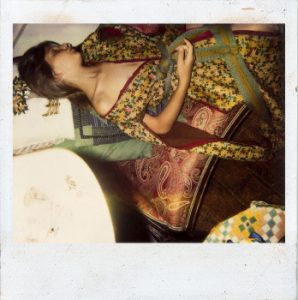
This is the Gagosian’s first exhibition with the Estate of Balthus and it has been prepared in close association with the artist’s family. The exhibition will inaugurate Gagosian’s new ground-floor gallery at 976 Madison Avenue.
“Balthus: The Last Studies” presents for the very first time selections from an extensive but little-known body of preparatory photographic work by the painter, giving fresh insight into the working processes that he adopted late in life. This intimate exhibition also brings to light key continuities and correspondences between images throughout Balthus’ oeuvre, providing a resonant counterpoint to “Balthus: Cats and Girls: Paintings and Provocations,” the thematic survey of early paintings currently on view at The Metropolitan Museum of Art.
Chelsea Gallery Highlights
Angel Otero, Gates of Horn and Ivory
Lehmann Maupin, 540 W. 26th Street, New York
September 12 – November 2, 2013
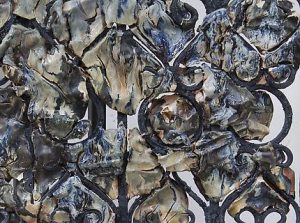
Otero’s second solo exhibition at the Lehmann Maupin features a new group of sculptures made from steel and porcelain, two materials the artist began experimenting with in 2012. A selection of new abstract paintings will also be exhibited in tandem with the sculptures.
Otero’s process-based approach to painting and sculpture is rooted in a dedication to experimentation and discovery within both his chosen materials and the artist’s own psyche. In his new body of sculptures, the artist combines two traditional and ubiquitous materials – steel and porcelain – and pushes their integration to unexpected, and often paradoxical, results. The final gate-like structures conjure feelings of security and protection while also evoking a delicate and precious nature.
Eric Aho, Translation
DC Moore, 535 W. 22nd Street, New York
October 10 – November 9, 2013

Aho explores our tenuous ability to represent things seen, remembered, and embellished by our minds. “As he sees it,” Diana Tuite writes in the catalogue essay, “his task is to present immediacy remembered, to reconcile directness with introspection. How might the experience of the painting reciprocate the experience of that which it depicts?” His paintings suggest that imaginative flourishes and digressions are more vital and interesting than a supposedly accurate, “objective” rendering of a lived experience.
Dan Walsh
Paula Cooper Gallery, 521 W. 21st Street, New York
October 12 – November 16, 2013

The series on view, titled Cycle (2013) comprises eleven paintings in which Walsh translates specific referents into his own visual language. From Peruvian textiles and Russian icons to Pop art, Op art and Surrealism, Cycle presents a catalogue of wide-ranging cultural and historical sources, reconfigured through Walsh’s playful yet rigorous vocabulary. These affinities and influences provide experimental material for a deconstruction of the vocabulary of abstraction. Surprising and heterogeneous, though unified by the organizing structure of the grid, the paintings take Walsh’s work in new directions. The paintings evoke not only the history of painting but also make connections with graphic design, fabric patterns, architecture or Eastern spiritual art.
Sophie Calle, Absence
Paula Cooper Gallery, 534 W. 21st Street, New York
October 18 – November 16, 2013

These works are an ever-changing project inspired by the loss of Calle’s mother Rachel Monique and were first exhibited in Venice in 2007, and then in expanded exhibitions at the Palais de Tokyo (2010) and the Festival d’Avignon (2012). As Patrick Frey observed in Sophie Calle: The Reader, “Absence recurs in Calle’s oeuvre as a generative drive. “These mementi mori demonstrate the artist’s deft weaving of photographic documentation, narrative texts, found imagery and personal iconography. Calle’s efforts to create a space for the deceased are both intimate and universally resonant acts of elegiac composition.
Best of NYC Museum Exhibitions for Fall 2013
Chris Burden: Extreme Measures
The New Museum, 235 Bowery, New York
October 2, 2013 – January 12, 2014

On view at the New Museum is “Chris Burden: Extreme Measures,” an expansive presentation of Chris Burden’s work that marks the first New York survey of the artist and his first major exhibition in the US in over twenty-five years.
Burden’s epoch-defining work has made him one of the most important American artists to emerge since 1970. Spanning a forty-year career and moving across mediums, “Extreme Measures” presents a selection of Burden’s work focused on weights and measures, boundaries and constraints, where physical and moral limits are called into question.
Magritte: The Mystery of the Ordinary, 1926 – 1938
Museum of Modern Art, 11 W. 53rd Street, New York
September 28, 2013 – January 12, 2014

This exhibition, co-organized by The Museum of Modern Art, The Menil Collection, Houston, and The Art Institute of Chicago, is the first to focus exclusively on the breakthrough Surrealist years of René Magritte, creator of some of the 20th century’s most extraordinary images. Beginning in 1926, when Magritte first aimed to create paintings that would, in his words, “challenge the real world,” and concluding in 1938 – a historically and biographically significant moment just prior to the outbreak of World War II – the exhibition traces central strategies and themes from the most inventive and experimental period in the artist’s prolific career. Displacement, transformation, metamorphosis, the “misnaming” of objects, and the representation of visions seen in half-waking states are among Magritte’s innovative image-making tactics during these essential years.
Also on view at the MoMA:
New Photography 2013 presents recent works by eight international artists who have expanded the field of photography as a medium of experimentation and intellectual inquiry.
Dorothea Rockburne: Drawing Which Makes Itself engages the viewer visually and bodily, shaping their perception of the gallery space and challenging expectations of what a drawing can be. Rockburne has said, “Drawing is the bones of thought.”
Mike Kelley
MoMA PS1, 22-25 Jackson Avenue, Long Island City, NY
October 13, 2013 – February 2, 2014
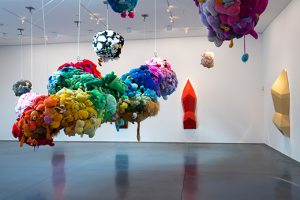
Regarded as one of the most influential artists of our time, Mike Kelley (1954-2012) produced a body of deeply innovative work mining American popular culture and both modernist and alternative traditions – which he set in relation to relentless self- and social examinations, both dark and delirious. Bringing together over 200 works, from early pieces made during the 1970s through 2012, the exhibition occupies the entire museum. This exhibition marks the biggest exhibition MoMA PS1 has ever organized since its inceptual Rooms exhibition in 1976.
Robert Indiana: Beyond Love
Whitney Museum, 945 Madison Avenue, New York
September 26, 2013 – January 5, 2014

Robert Indiana (b. Robert Clark, 1928) first emerged on the wave of Pop Art that engulfed the art world in the early 1960s. Bold and visually dazzling, his work embraced the vocabulary of highway signs and roadside entertainments that were commonplace in post war America. This retrospective will reveal an artist whose work, far from being unabashedly optimistic and affirmative, addresses the most fundamental issues facing humanity – love, death, sin, and forgiveness – giving new meaning to our understanding of the ambiguities of the American Dream and the plight of the individual in a pluralistic society.
Balthus, Cats and Girls – Paintings and Provocations
The Metropolitan Museum of Art, Fifth Avenue at 82nd Street, New York
September 25, 2013-January 12, 2014
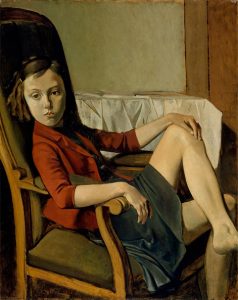
Balthus is best known for his series of pensive adolescents who dream or read in rooms that are closed to the outside world. Focusing on his finest works, the exhibition will be limited to approximately thirty-five paintings dating from the mid-1930s to the 1950s. Between 1936 and 1939, Balthus painted his celebrated series of portraits of Thérèse Blanchard, his young neighbor in Paris. Thérèse posed alone, with her cat, or with her two brothers. When Balthus lived in Switzerland during World War II, he replaced the forbidding austerity of his Paris studio with more colorful interiors in which different nymphets daydream, read, or nap. The exhibition concludes with images that he created of Frédérique Tison, his favorite model, at the Château de Chassy in the Morvan during the 1950s.
Robert Motherwell, Early Collages
Guggenheim, 1075 Fifth Avenue, New York
September 27, 2013-January 5, 2014
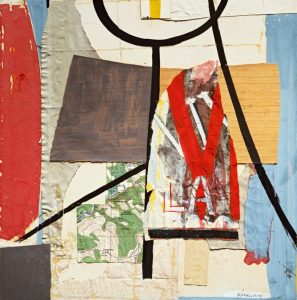
Devoted exclusively to papier collés and related works on paper from the 1940s and early 1950s by Robert Motherwell, this exhibition examines the American artist’s origins and his engagement with collage, which he described in 1944 as “the greatest of our [art] discoveries.”